
















How to use creative automation?
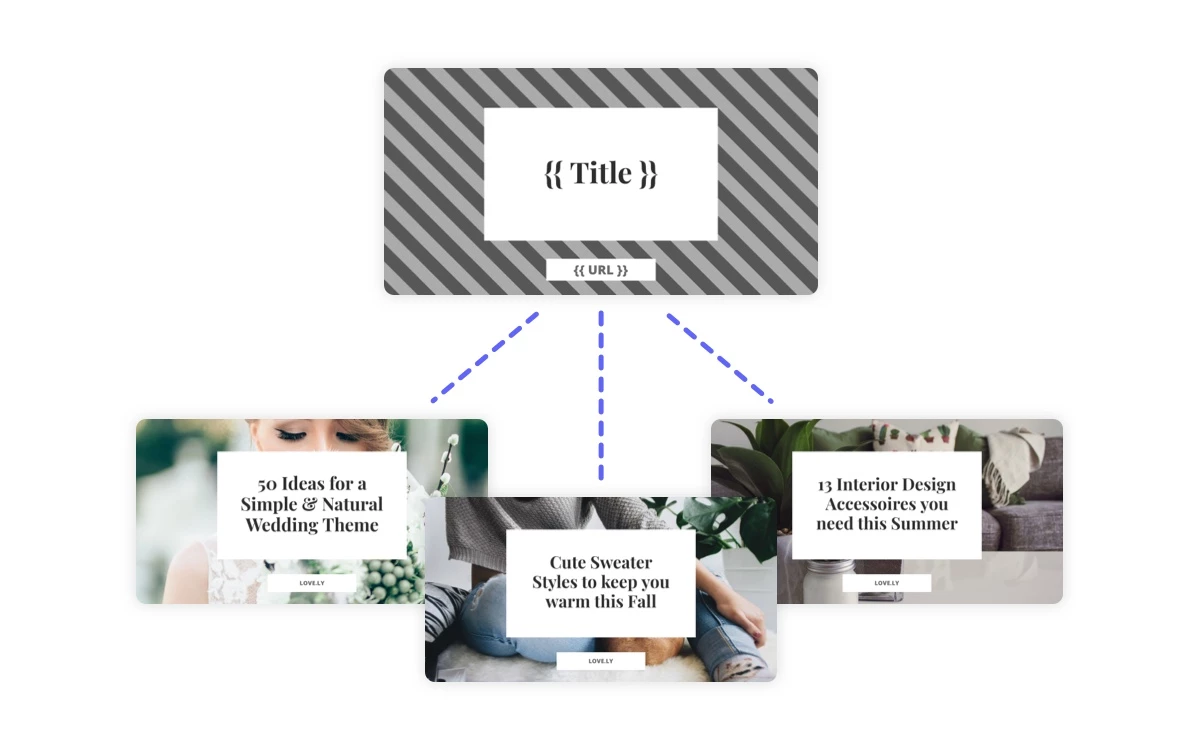
You can use creative automation to operationalize your marketing and create predictable content variations for ads or social media posts. But there are more use cases for fully automated production, like personalized marketing assets, in-app share graphics, visuals for marketplaces, events and more.
Setting up such a workflow starts with creating dynamic templates for your creatives. These templates contain dynamic elements such as text of images that can be automatically replaced with your content later.
You can then use your own data to automatically generate variations of your base template. This data may come from nocode tools like Airtable, be delivered by workflows with tools like n8n / Make / Zapier, or directly from your CMS or data storage using an API.
One design, endless variations!
What is the difference between creative automation and AI generation?
AI image or video generation basically invents your visuals every time you enter a prompt. While prompts can influence style and composition, the output is not fully predictable and can't be reproduced reliably. The same prompt will get you different results. This can work great for creative, iterative processes in design, but it is not a repeatable production engine.
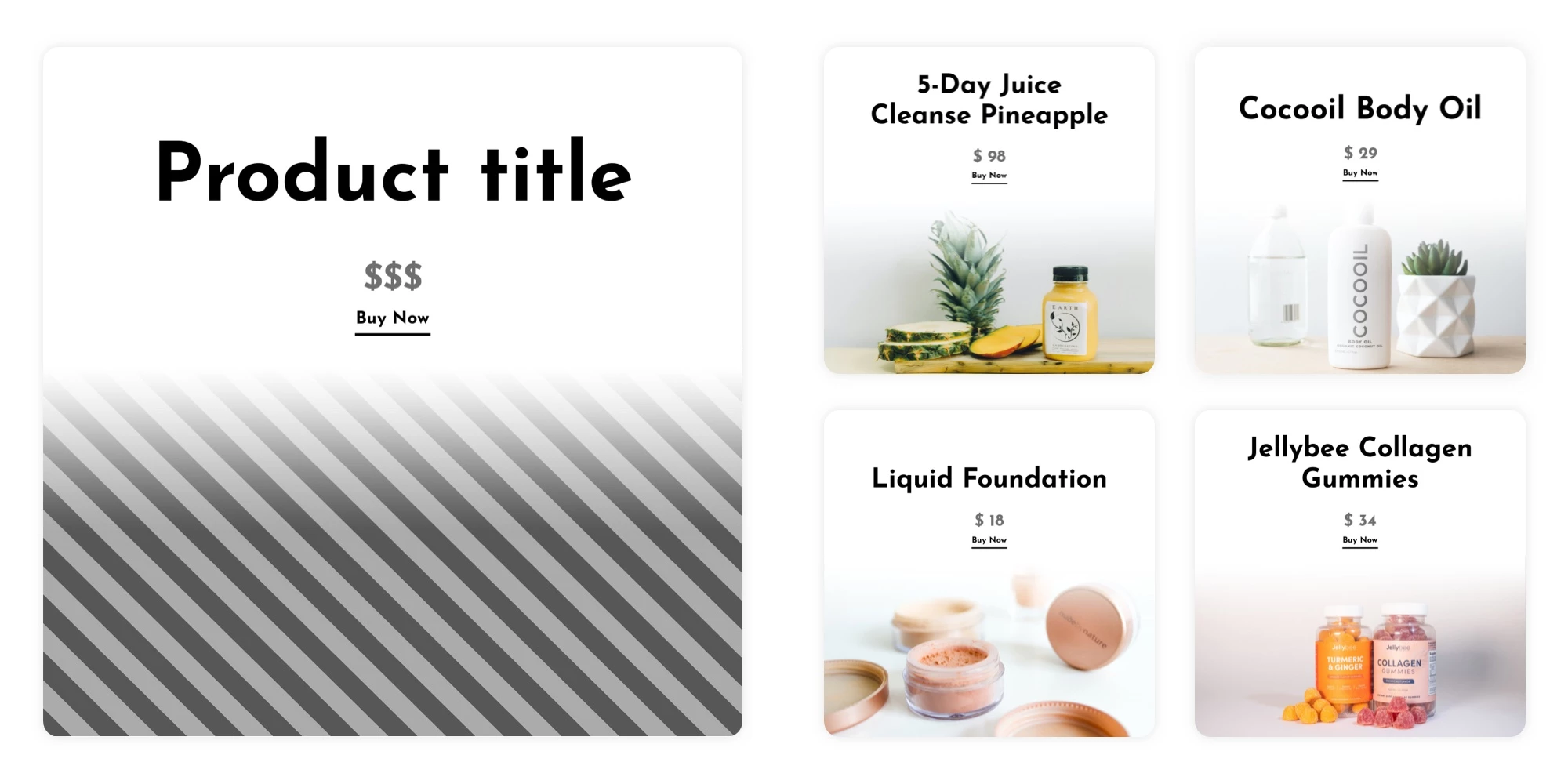
Creative automation is designed for predictable production at scale. It's based on templates, content data, rules and constraints, making it consistent in a way that AI can't be. The same input will always produce the same visual.
So, AI generation designs new visuals with every generation, while creative automation produces assets from existing designs and structured data.
What are the benefits of creative automation?
- Scale your visual production with template-based workflows
- Remove human bottlenecks and automate repetivite tasks
- Set up self-service asset generation for non-designers
- Make sure assets are consistently on-brand
- Localize, translate and personalize graphics reliably
Does creative automation replace designers?
Automation used to sound like a dirty word when it’s mixed up with creative tasks. Creativity needs imagination, artistic skills and sensitivity. Creative automation does not aim to replace designers or their skills. Rather, it lets them define the artistic vision and takes over to automate the grunt work of creating asset variations afterwards.
It ensures quality while scaling production. Once you set up a dynamic template, it can be used to create variants exactly according to your spec automatically, without taking up human resources.
So creative automation removes human bottlenecks, not human creativity.
Who should use creative automation?
Every business is in the business of content: Nowadays, content creation is a mandatory part of marketing for almost every industry. So there’s honestly no specific type of business that can benefit the most (or least).
Of course: The more visuals you need, the more value you get by automating production. But having creative automation in your toolkit will also fuel ideas on how to make use of it. Being able to create on-brand assets automatically makes campaigns possible that are unthinkable when relying on manual production or unpredictable AI generation.
Who especially loves creative automations:
- 🧑💻 Product teams: Those who build products, apps, platforms or systems that use automated asset generation (for example triggered by new data or user actions) will need a reliable production infrastructure
- 📢 Marketing operations & automation teams: Teams and agencies who want to produce high-volume, repeatable marketing assets like campaign variants, localization or personalized assets can remove human bottlenecks without compromising on control
- 🦄 Entrepreneurs & intrapreneurs: Those who crave to continually make workflows better will appreciate the potential for increasing efficiency and getting routine tasks out of the way of more impactful work
- 💭 Content strategists: Those who love making content reusable will appreciate the possibilities for data-driven, automated production
- 🎨 In-house design teams: Creative people want to do creative work. Automation protects design quality while reducing repetitive execution work
The benefits of creative automation can have a huge impact for large organizations. It saves valuable time and helps optimize operations, making big teams more efficient.
But it can be a game changer for small businesses as well by preventing them to be held back by routine tasks and skill gaps. Having more time available for high-impact work makes a real difference for those with limited resources.
Do you need a big budget for creative automation?
We initially built our tool Placid as a solution for our own small team, and our customers prove that any size of business can benefit from automated asset production.
So we believe creative automation should be accessible while also being able to scale with your business and workflows:
- We offer affordable pricing plans for small automation workflows, but support large-scale production as well
- Placid offers APIs and SDKs to offer you maximum flexibility: Integrate it with your apps, or add creative automation as a part of your own service
- We also integrate with the tools you already use, and you can set up automations quickly on your own